Advanced Combat in Bug Fixes
Beyond the three cuts — reads, counters, and the habits that actually win on live servers.
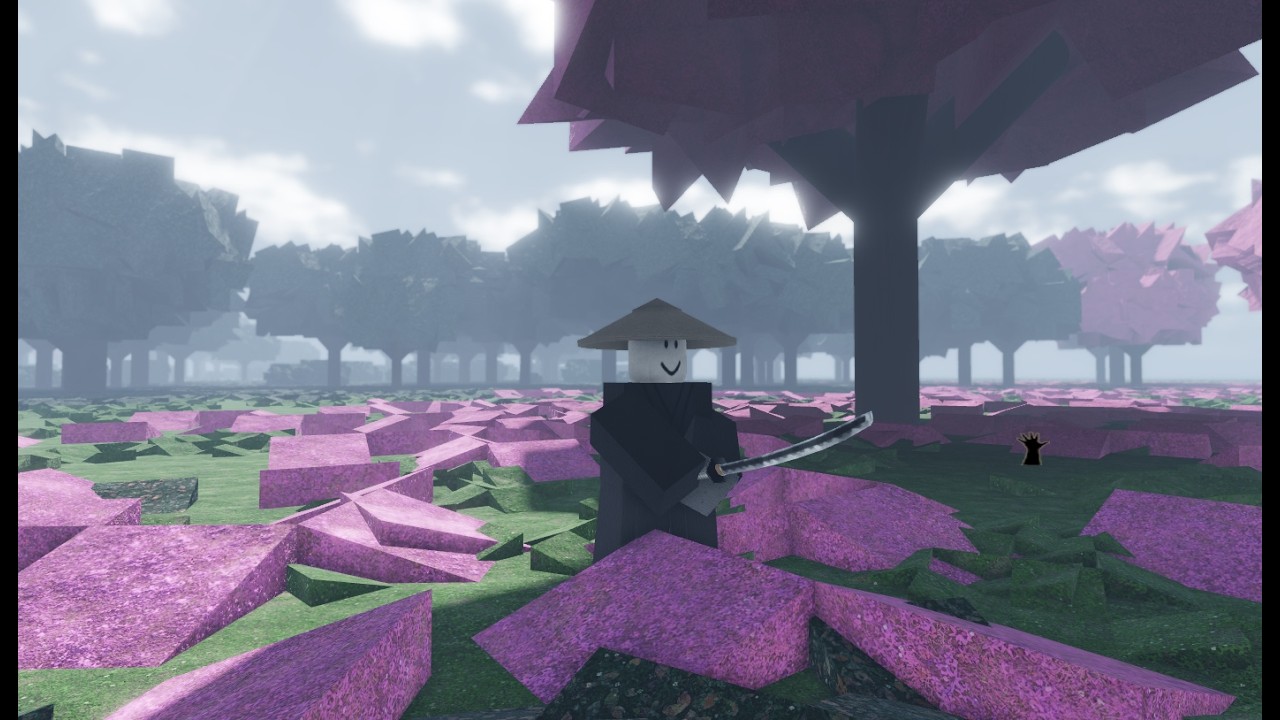
The how to fight page covers the three-cut rule, the bow timing, and the basic duel loop. This page goes further: into the reads that separate a session regular from a tourist, the displacement tricks that make chargers eat steel, and the team fight thinking that applies when you are not in a clean 1v1. Read the basics first. Come here when the basic loop is muscle memory and you are ready to think about what the other person is thinking.
This page assumes you know E Q F, R, G, X, B, and =. It assumes you have run enough live duels to know what a katana swing looks like. If you still flinch at a bow, go back to getting started and controls.
The read stack
Every exchange in Bug Fixes is a read stack. You are not reacting — you are predicting based on what you have seen. The stack from easiest to hardest:
Habit read. They press F every time. You stance-change into their recovery. This is the B-tier beating described on how to fight. It works on players who have not learned the system.
Timing read. They press R after they see you commit. You delay your cut one beat so their stance change arrives too late. This is S-tier on the stance tier list. It requires you to watch their shoulders, not your own swing.
Counter read. They know you delay. They feint a commitment to bait your delayed cut, then cut during your recovery. This is the mind game that makes high-level Bug Fixes look slow. It is also why the first exchange of a new duel is often just both players watching.
Adaptation read. After the first three exchanges, you know which read level they are operating at. If they never adapt from habit read, you stance-change every time. If they play counter reads, you go back to timing reads to reset the pattern. The player who adapts fastest wins the set.
Displacement tricks
G displace is a committed step, not a teleport. But the commitment is short enough that smart players use it in ways that look like feints:
The G-bait. You displace toward them as if you are committing to the cut. They cut expecting contact. You stop just outside their range and let the cut whiff. Your cut lands in their recovery. This works on players who use G as a chase tool rather than a spacing tool.
The G-recovery. You throw a cut, they displace out. You immediately G in the same direction. They expected space; you expected the displacement. The timing is tight but the reward is high. If they do not displace after your cut, you are now too close and they can punish. This is why stance matters after the cut — you may need R before the G-recovery to be ready.
The G-feint. You G toward them, then immediately stop and hold R. They flinch and cut. You stance-change into their cut. This is expensive — if they do not flinch, you are now out of position. Only use against players you have already read as nervous.
1v1 theory beyond the loop
The how to fight page gives you a simple loop: bow, draw, test cut, R, G, reset. Advanced 1v1 theory adds:
Space control. You do not need to be cutting to be winning. Holding the right distance — just outside their cut range, close enough to threaten — forces them to commit first. The player who controls space controls the first cut.
Angle priority. A cut from an unexpected angle is harder to read than a cut from the expected angle. Even if your directional cut is the same key, the angle change makes the timing different. Practice cutting from slightly different positions rather than always cutting while facing directly.
Reset pressure. After any exchange, you can reset by sheathing on X and stepping back. This is not cowardice — it is a tactical choice to force a new first cut. If you always press after a win, you become predictable. If you always reset after a loss, you never learn to hold pressure.
The bow read. Some players bow as a genuine request. Others bow as a way to make you lower your guard before a sprint attack. If someone bows and immediately charges, they were not bowing — they were stalling. This is not honorable, but it is common. Watch their feet, not their hands.
Team fight thinking
Bug Fixes runs 50-player servers. The honor page covers the social contract, but the combat logic is different when you are not in a clean 1v1:
Do not 2v1 fairly. If two players are fighting one, your goal is to end the exchange fast, not to test honor. Gang up cleanly — cut from behind, let your ally create an opening, do not watch a 1v1 like a referee.
Disrupt the musket line. The gun teaser describes musket lines as formation play. In a mixed server with katanas and muskets, your job is to break the formation. G-displace into the flank, force them to face multiple directions. A line that has to defend in all directions loses the lane.
The prayer circle protection. If you see a pray circle — a cluster of players holding B — do not attack it unless the server has declared that circle hostile. Attacking a prayer circle is the fastest way to turn a peaceful server hostile. If you need the honor context, see the honor page.
Fighting near NPCs or environmental clutter. The lantern map has stacked rocks, torii bases, and uneven ground. In a 1v1, use the clutter for cover between exchanges. In a team fight, your opponent will use it to reset. Do not chase through dense terrain — force them back to open ground.
Common habit counters
The charger. They sprint directly at you and press F on contact. Counter: do not cut as they arrive. Displace on G to the side and cut their back as they overshoot. If they hit a wall or a rock, they are stuck in recovery for a full beat.
The masher. They press one directional key repeatedly. Counter: stance-change on R into their recovery, then displace on G to reset. If they mash F, the cut comes from the same angle every time. R puts you in a stance that answers F.
The stancer. They tap R constantly and seem to change cut direction on every exchange. Counter: stop committing first. Let them R into a cut and cut their recovery instead. If they R without cutting, they are waiting for you. Make them wrong by not attacking.
The cinematic player. They have kurosawa on and cannot track you well. Counter: do not stand in a lantern shot. Move constantly. They are filming a still target. A moving target in their frame is harder to track than a still one.
The prayer grinder. They are farming armor and not paying attention to the duel. Counter: you can walk away. If you must fight, they are often in the B animation and cannot respond to a cut. This is the social conflict described on honor.
The mental game
Bug Fixes is a game about reads, not reflexes. The best players on the field are not the fastest — they are the ones who have seen the most exchanges and built the deepest read stack. To build yours:
Watch before you act. When you enter a new server, watch one or two exchanges before you engage. You learn their habit level, their honor style, and their spatial awareness. This costs you nothing and gives you real information.
Lose on purpose sometimes. If you always win, you stop learning. Find players who are better than you and let them teach you what a real read looks like. The tier list ranks these reads, not your win rate.
Do not blame armor. A player in red plates who loses to you still has the same stance and cut habits they had before the armor. Armor changes confidence and silhouette. It does not change the read stack. If you lose to a plated player, you lost to a habit, not to the plates.
Leave bad tables. If a server has decided it is a gank server, leave. You are not required to participate in a playstyle that does not interest you. The lantern map has space for everyone. If one cluster is hostile, walk to another lantern.
After the read is made
When you have read them correctly, execute cleanly. Cut, let the animation play, reset on X if needed, and go again. The game is not about having the most reads — it is about executing the read you have made. A perfect read that you mess up mechanically is still a loss. Practice the cut that follows the read until the muscle memory matches the theory.
The stance tier list, the loadouts page, and the how to fight page are all building toward this: the moment where you see what they are doing, you know what to do about it, and your hands do the right thing.
Frequently Asked Questions
Quick answers to the most common questions.
What is the read stack in Bug Fixes?
A hierarchy of predictions based on what you have seen: habit read (they repeat one action), timing read (they adapt to your rhythm), counter read (they bait your delayed cut), and adaptation read (they change strategy based on what you show).
How do I beat a charger?
Do not cut as they arrive. Displace on G to the side and cut their back as they overshoot. If they hit terrain, they are stuck in recovery.
What is the G-bait?
You displace toward them as if committing, stop just outside their range, and let their cut whiff. Then you cut their recovery. It works on players who use G as a chase tool.
Is Bug Fixes about reflexes or reads?
Reads. The best players have seen the most exchanges and built the deepest read stack. Reflexes help, but the game is won by predicting what the other person is doing.
How do I deal with a musket line in a team fight?
Disrupt the formation. G-displace into the flank, force them to face multiple directions. A line that has to defend in all directions loses the lane.